Drummond Traverse Ski Mountaineering on 28-Mar-2002
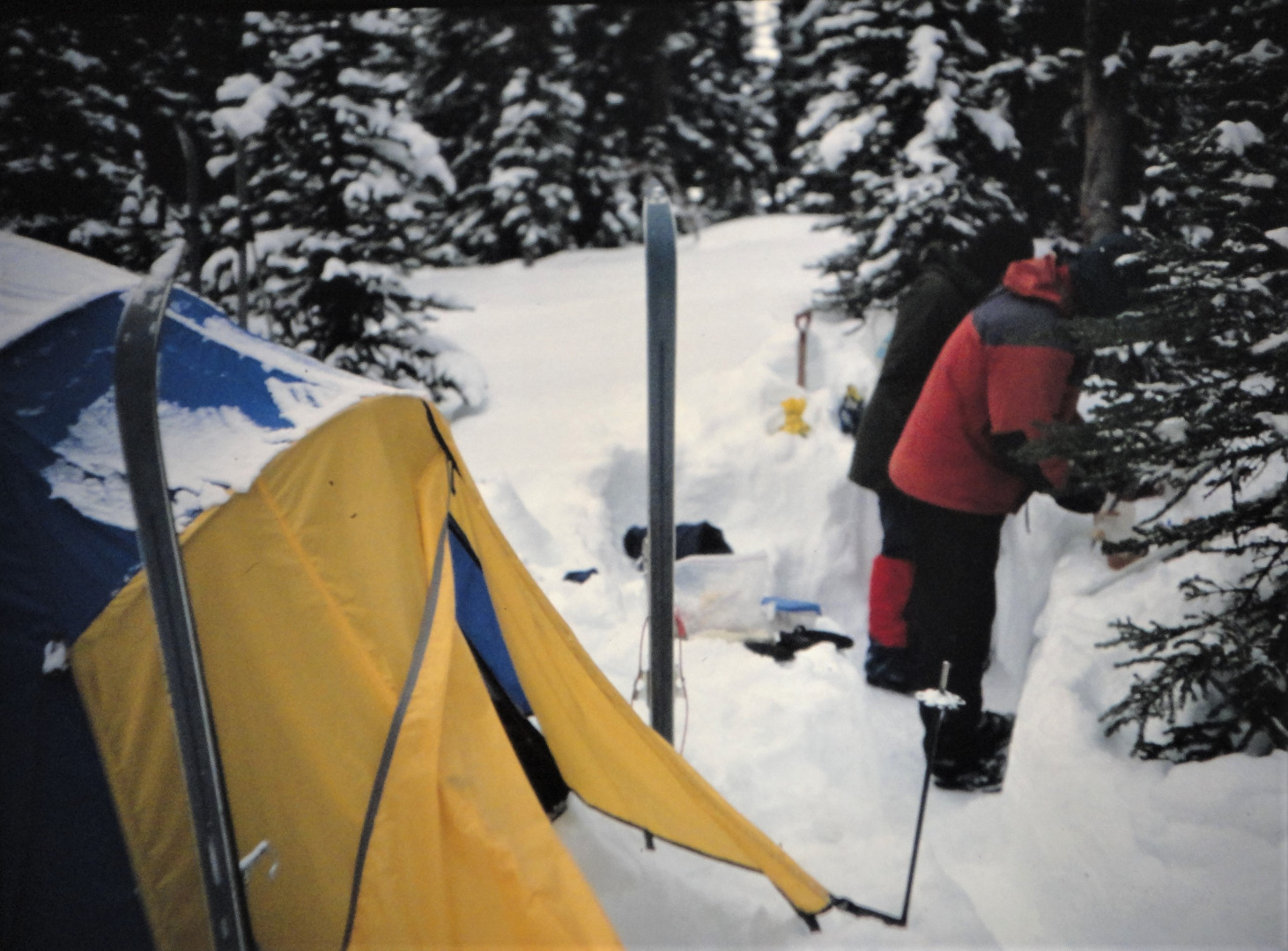
Thursday morning we drove up to Lake Louise where we got the requisite pastries at Laggans and a Park permit from the Info Center. We left Dave's car at Fish Creek Parking Lot near the ski hill, and drove up to Mosquito Creek, arriving about 10:30. The ski up to North Molar Pass was one of the easiest I have done with the trailbreaking in Molar Meadows near perfect with a strong snowpack and a couple of inches of powder. There was a strong west wind at the Pass, but overall the weather and temperature were just fine for skiing. We enjoyed a fun ski down to Fish Lakes campground where we made camp for the night.
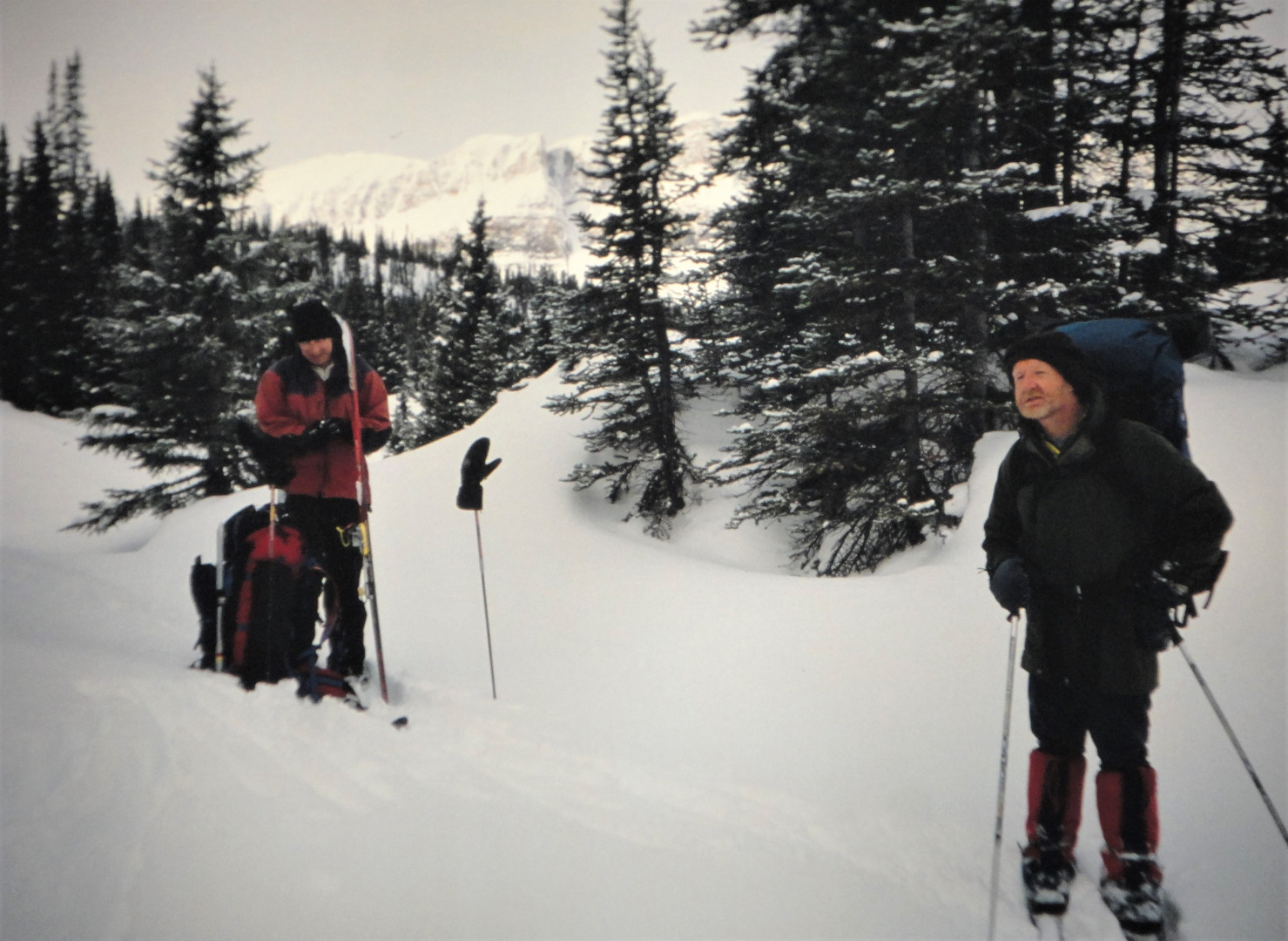
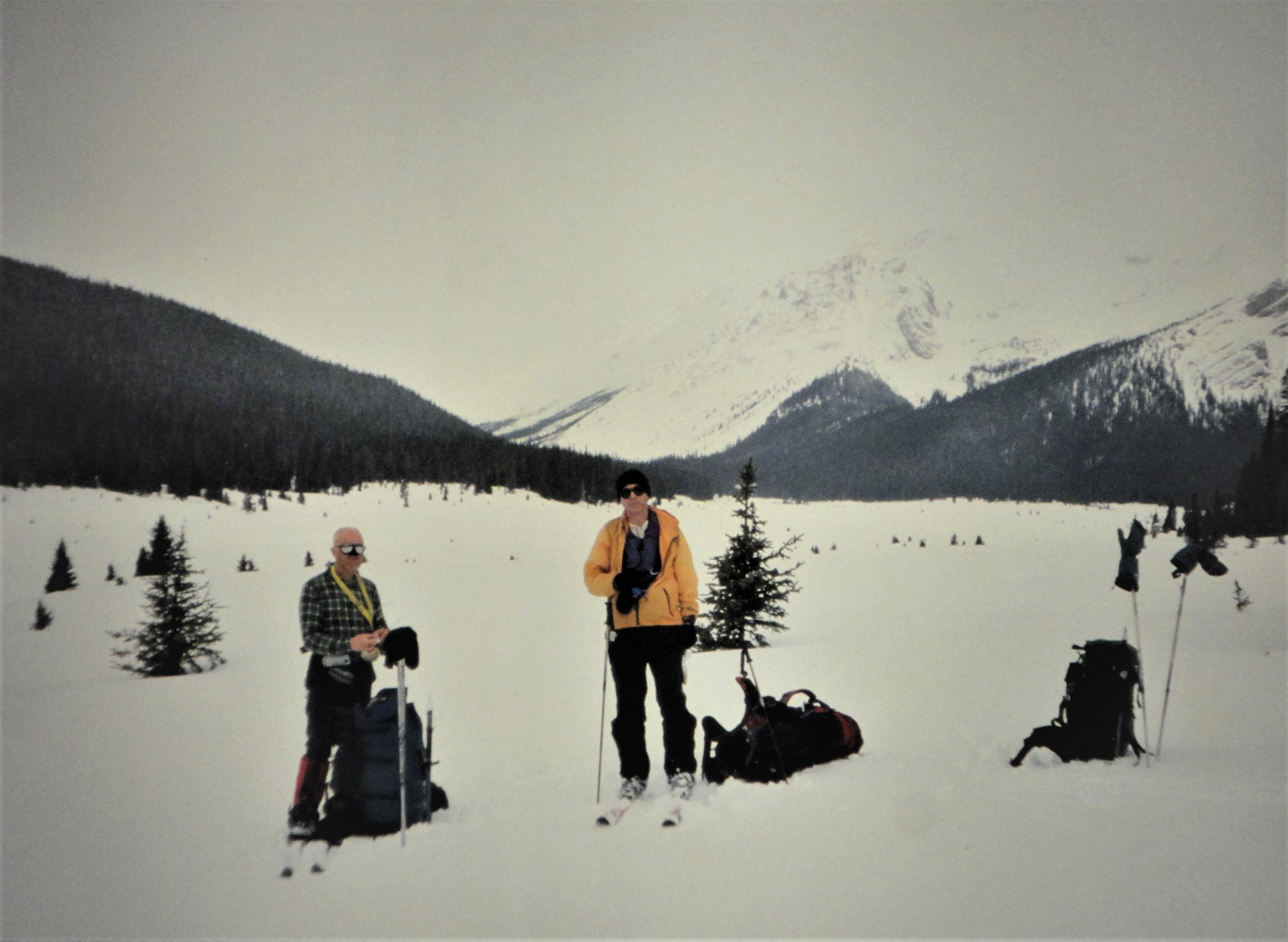
Friday morning gave us a glorious ski descent down a creek gully to the Pipestone River. We had thought that this 5 km stretch of Pipestone Valley bottom may be tough going, but to our pleasant surprise the top 6 inches or so of the snowpack had frozen solid, and trailbreaking was a breeze. We noted that beneath this solid layer was 2 to 3 feet of goopy faceted snow, something that reminded Alistair and I of our epic partial Banff-Jasper traverse of two years ago. Skiing the expansive meadows of the Pipestone in Spring sunshine was very satisfying considering what it could have been like.
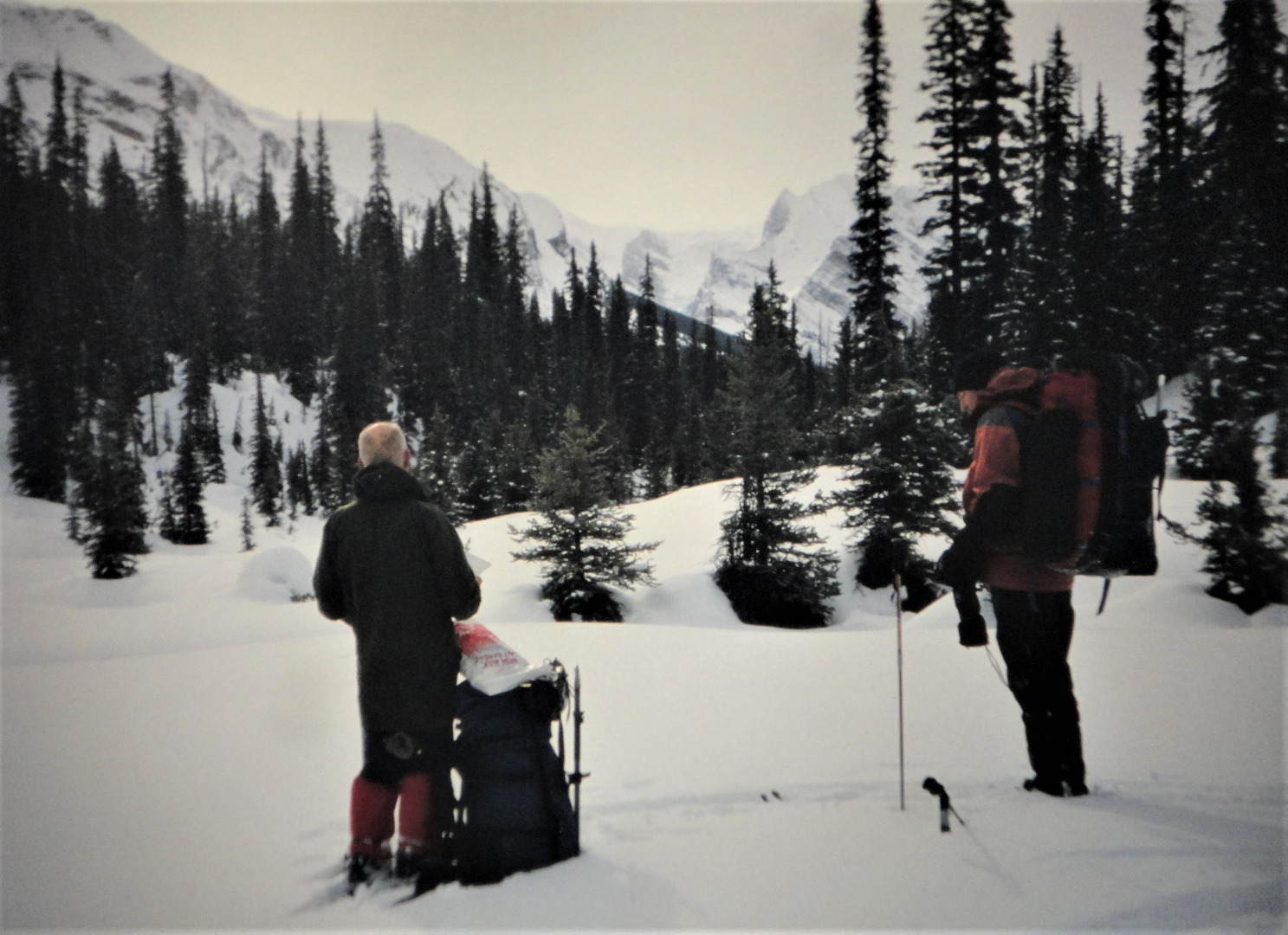
Along the way we had a chance to observe the route we needed to take up to the Drummond Glacier. From a distance it looked quite daunting.

The route lies below the prominent cliff in the center
We cut the corner through open forest to enter Fossil Creek. The route up the valley had scenic views of Cataract Peak looming above us. We came across a family of moose that had been busy eating the evergreens. They had established a network of deeply treaded trails linking together groves of trees. Soon the valley turned southeast and we had a close up view of the climb that lay ahead. The route was supposed to follow a bench perched in the cliffs that leads up 3500 feet to the glacier. However the bench was not that obvious from our position on the valley floor. Nevertheless, the map could not be wrong could it?, and we proceeded to climb up an open slope to where the bench should start.
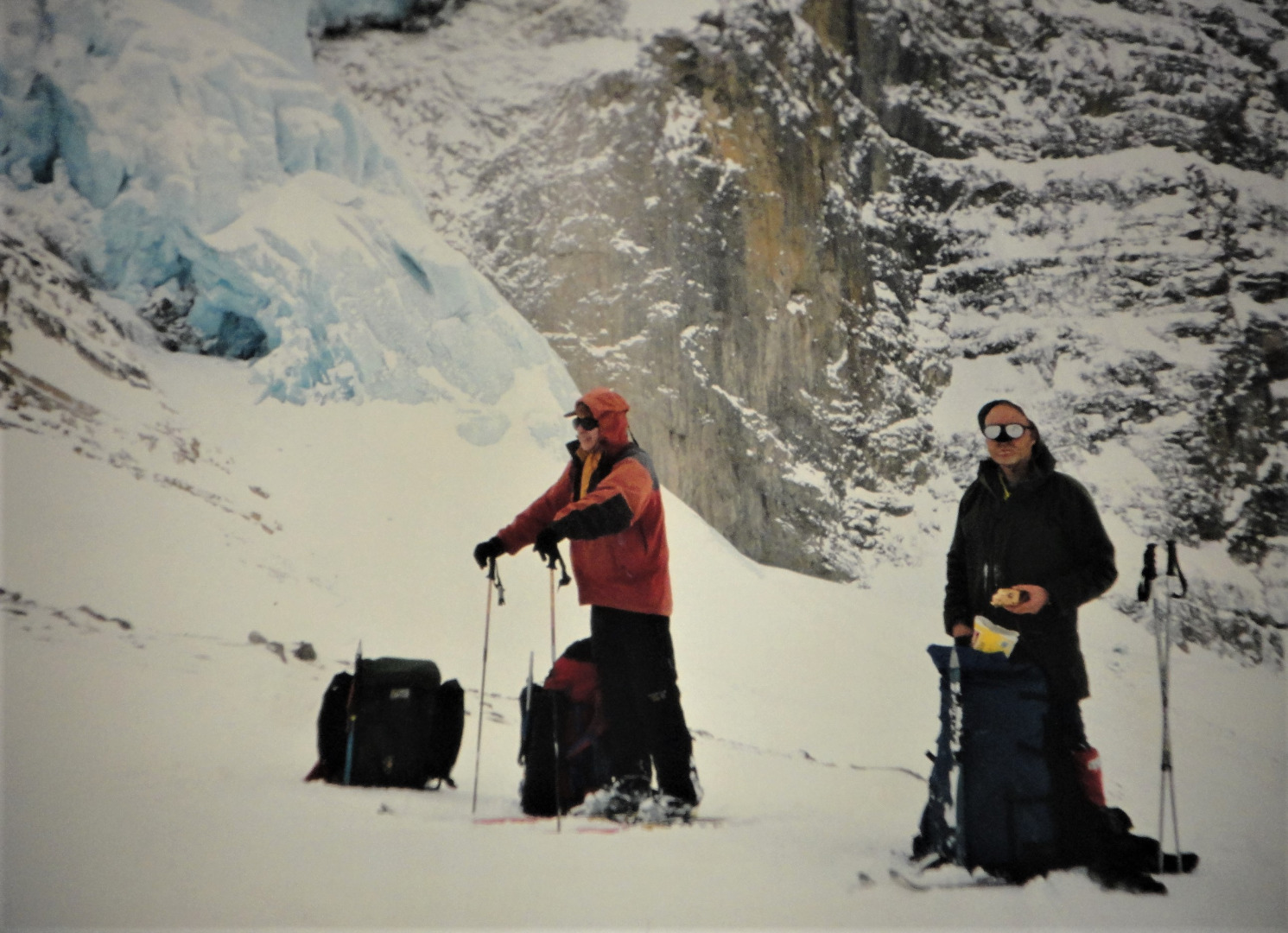
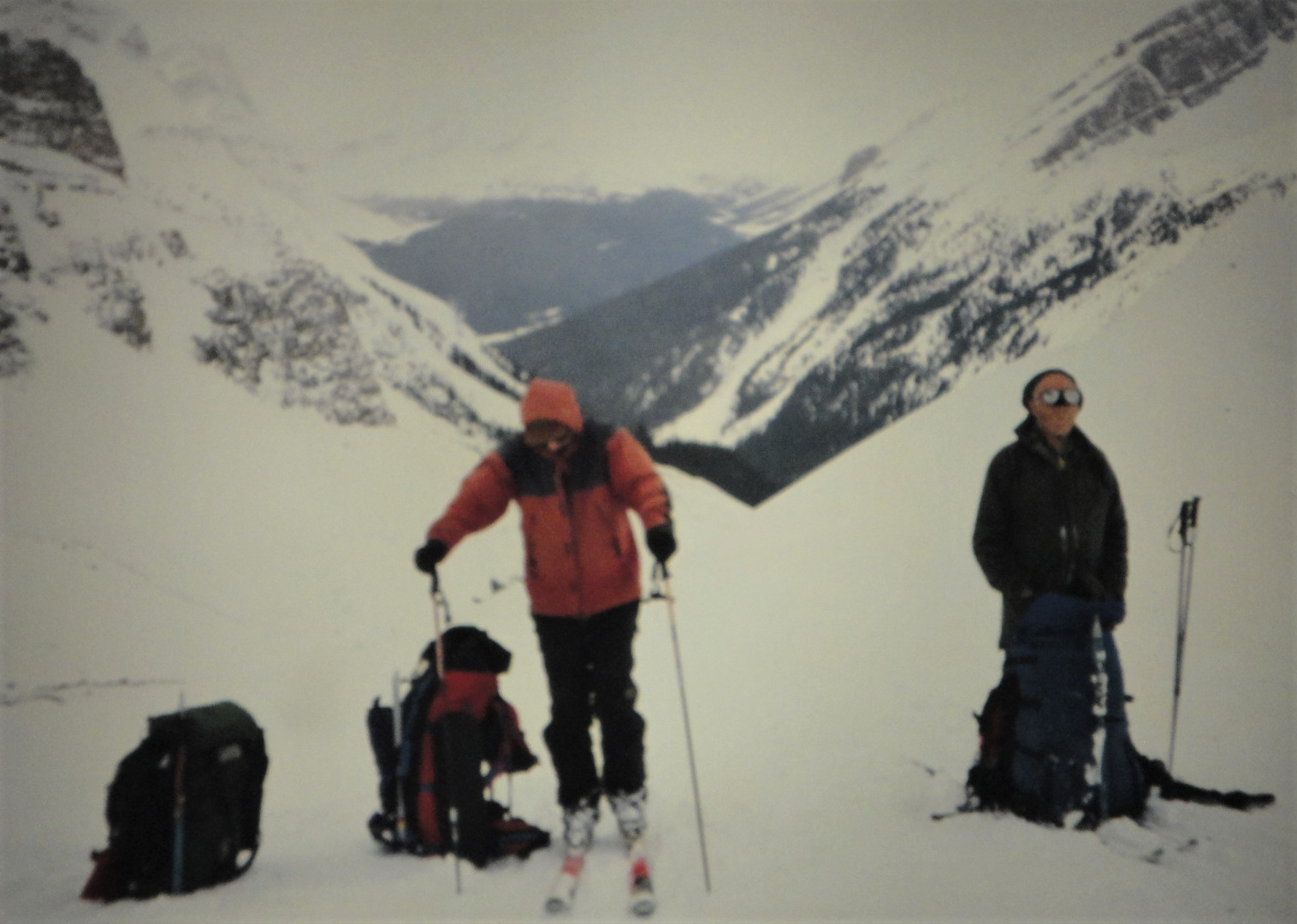
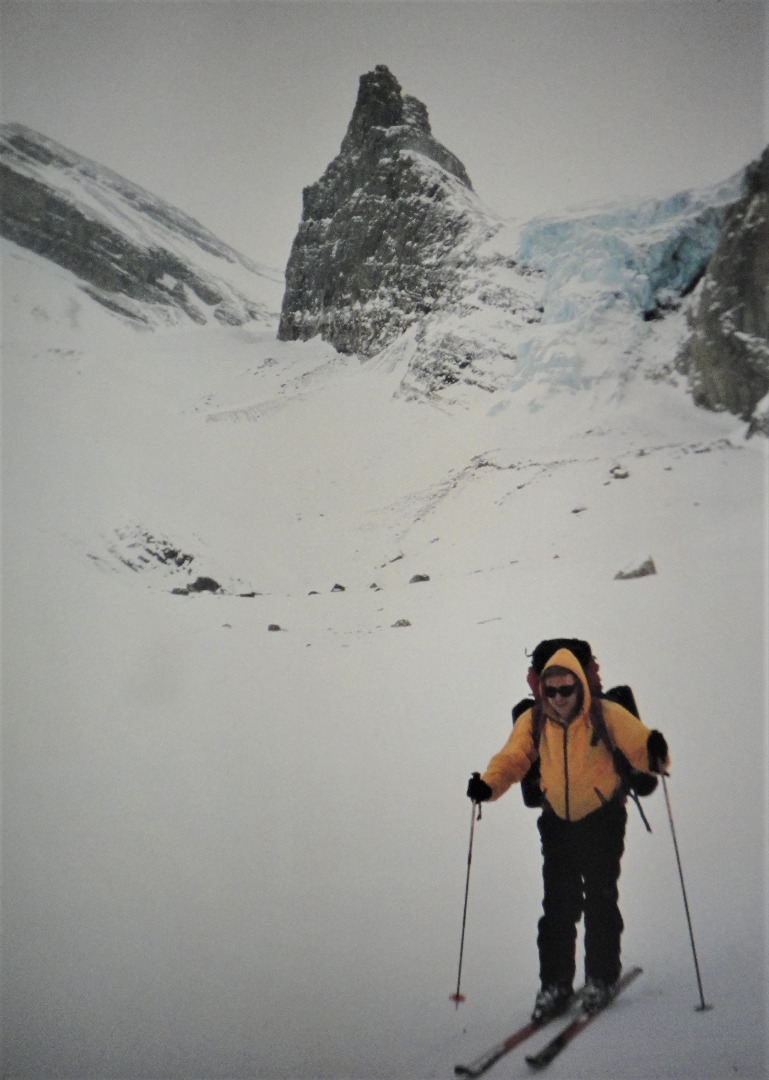
After 800 feet of switchbacks we came to the bench and were surprised at it's width, several hundred feet across in places. The bench offered a stunning traverse below shear cliffs and icefalls. After climbing the bench for 1500 vertical feet, it turned south and onto the foot of the glacier. Here we roped up, and switchbacked up the final 1000 feet. At it's steepest section Dave elected to kick steps up as his double-cambered skis did not edge too well. This section would make the trip rating at least MN7, if not MN8. As we were climbing this last bit the weather took a noticeable turn for the worst. By the time we reached the crest of the glacier the winds were strong from the north and the skies a heavy threatening gray. We had planned to get to the lea side of a ridge at GR649173, but by 7:30 it was getting dark. We made camp at 10,000 feet in quite miserable conditions, fully exposed to the oncoming gale.

The bench route
During the night snow had found it's way inside the tent, but by morning the winds had abated somewhat and the skies cleared. We packed up camp, and decided to ski up to an easy peak located at GR647175. But as the weather gods would have it, as we made the summit blustery conditions returned and obscured most of what would have been splendid views of all the peaks surrounding the Drummond.

Dave and Alistair on the summit above camp
There were two route choices in skiing down the glacier and into the valley to the south. One described in Scott's guidebook recommends the valley route on the east side of the glacier. The second was one that Alistair had used on two previous occasions, albeit 10 years ago, which took a bench leading down from the middle of the glacier. We chose Alistair's route, and had a fine ski down the gentle slopes to where the bench should start. Unfortunately we were now in almost whiteout conditions and the task of finding the location for the start of the bench proved difficult. After some time of futile search, we decided to make for the valley route, but this too proved to be a challenge. The smooth map contours belie the fact that the lower south end of the Drummond has numerous cliffs bands that pinch in and out. These can be difficult to discern from above, and care was needed make our way over to the valley. Often we would throw snowballs down a suspect slope to make a track in the snow we could see. Eventually we made it to a bench just above the valley route and noticed a camp of six skiers below us. We were pleased to see them as this meant a broken trail to follow out, but at the same time perplexed as to how to get down to them. Eventually we followed the bench for several hundred feet where it too pinched out and offered easy slopes to descend.
We followed the ready-made trail down to the forested valley south of the glacier. Along the way we made good use of some fine tree skiing. We followed broken trail down to the Red Deer River, and then up the Red Deer River summer trail. We made camp a few kilometers before the Cyclone Warden Cabin. We were lucky to have a broken trail as the snow in this valley was sugary and baseless. This camp was much more pleasant than the previous night on the glacier. We were even treated by the Easter Moose who left traditional treats for us to find in the morning.
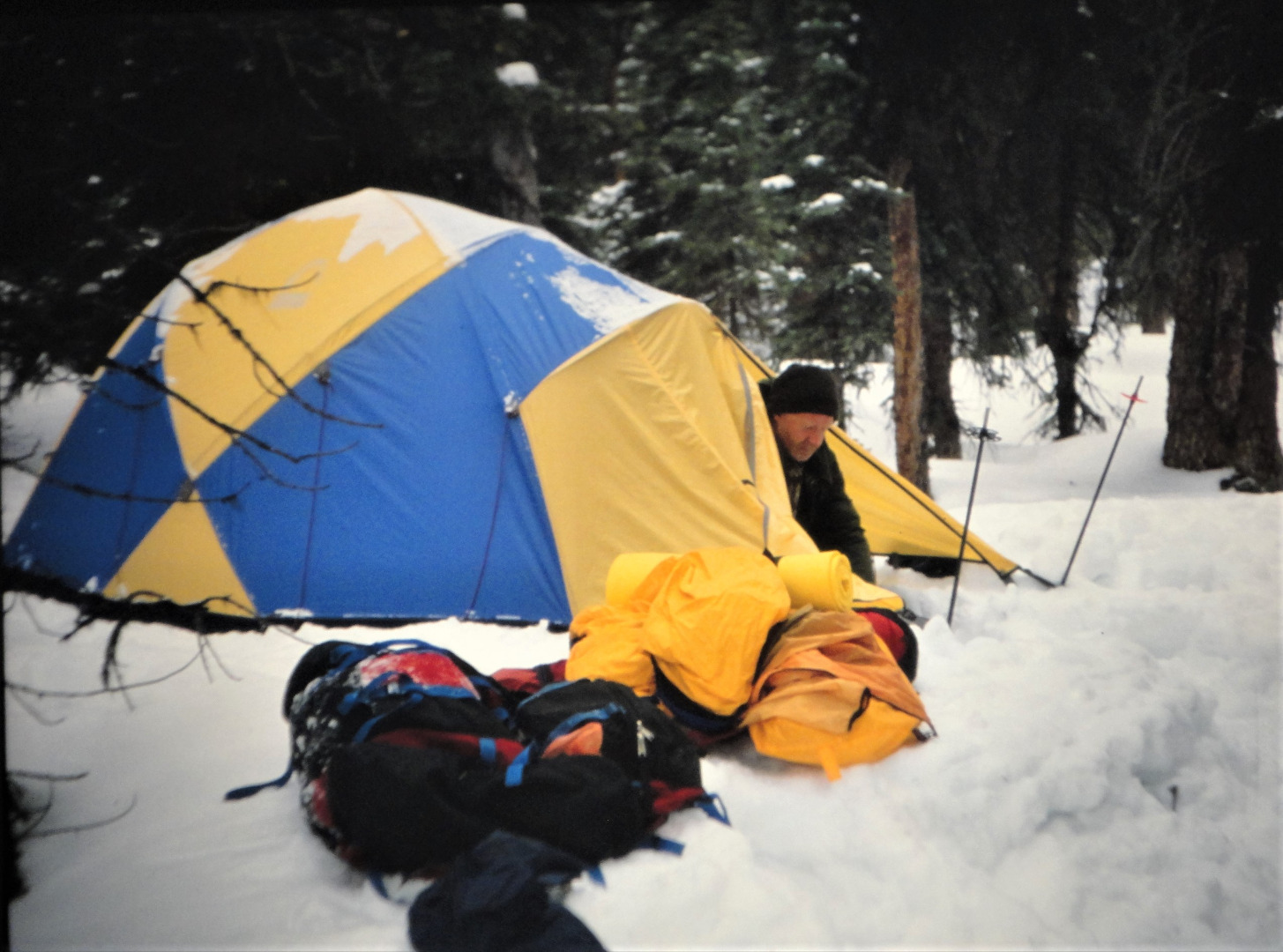

Gifts of the Easter Moose
Sunday, our last day, was to have us ski up to Baker Lake and out via Boulder Pass to Lake Louise. The weather again took a nasty turn, and our trek up to Baker Lake was in whiteout and blizzard conditions. This time the gale came from the south in contrast to previous northwest winds. Trailbreaking was again easy, and we even had the good luck to follow the tracks of another party who were returning from Skoki Lodge. Despite the weather we had a great run down from Boulder Pass and arrived at the car at about 5:30.
We thought the adventure had ended, and we looked forward to the traditional fare at the Drake in Canmore, and the ride home. On the way to Canmore we noticed a steady wind and snowfall, but presumed that this was still part of the system in the mountains we had been living with for the last four days. After dinner, the storm had intensified with strong winds from the east accompanied by heavy snowfall. Traffic on Hwy #1 was chaotic with many vehicles pulled over due to lack of visibility. By Deadman's Flats, Dave and I decided to check out the road conditions at the Husky. The news was grim with trucks jack-knifed and traffic stalled. We decided to not chance spending the night stuck on the road, and spent the night in beautiful downtown D.F. We had no idea of how Alistair was faring, but suspected he continued on with the urgency of his departure for England on Monday. The next day the weather gods played us for April Fools as the sky was crystal clear and the mountains shone in the morning light. If only it had been like this on the Drummond! We arrived back in Calgary by 9:00am to find that Alistair had made it back alright the previous night. On the way we counted over 20 vehicles either in the ditch or abandoned by the side of the road.
All considered it was a rewarding trip. We think the next odyssey in this area would be a combined Drummond - Bonnet Icefield traverse of six days, hopefully under sunnier skies. Participants: Alistair DesMoulins (coordinator), David, and Bob St.John (scribe).